
656 lines
23 KiB
Markdown
656 lines
23 KiB
Markdown
# Moka
|
|
|
|
[![GitHub Actions][gh-actions-badge]][gh-actions]
|
|
[![crates.io release][release-badge]][crate]
|
|
[![docs][docs-badge]][docs]
|
|
[![DeepWiki][deepwiki-badge]][deepwiki]
|
|
[![dependency status][deps-rs-badge]][deps-rs]
|
|
[![codecov][codecov-badge]][codecov]
|
|
[![license][license-badge]](#license)
|
|
|
|
> [!NOTE]
|
|
> If you have any questions about Moka's APIs or internal design, you can ask the
|
|
> AI chatbot at DeepWiki in a natural language:
|
|
> <https://deepwiki.com/moka-rs/moka>
|
|
|
|
> [!NOTE]
|
|
> `v0.12.0` had major breaking changes on the API and internal behavior. Please read
|
|
> the [MIGRATION-GUIDE.md][migration-guide-v012] for the details.
|
|
|
|
* * *
|
|
|
|
Moka is a fast, concurrent cache library for Rust. Moka is inspired by the
|
|
[Caffeine][caffeine-git] library for Java.
|
|
|
|
Moka provides cache implementations on top of hash maps. They support full
|
|
concurrency of retrievals and a high expected concurrency for updates.
|
|
|
|
All caches perform a best-effort bounding of a hash map using an entry replacement
|
|
algorithm to determine which entries to evict when the capacity is exceeded.
|
|
|
|
[gh-actions-badge]: https://github.com/moka-rs/moka/workflows/CI/badge.svg
|
|
[release-badge]: https://img.shields.io/crates/v/moka.svg
|
|
[docs-badge]: https://docs.rs/moka/badge.svg
|
|
[deepwiki-badge]: https://deepwiki.com/badge.svg
|
|
[deps-rs-badge]: https://deps.rs/repo/github/moka-rs/moka/status.svg
|
|
[codecov-badge]: https://codecov.io/gh/moka-rs/moka/graph/badge.svg?token=7GYZNS7O67
|
|
[license-badge]: https://img.shields.io/crates/l/moka.svg
|
|
|
|
[gh-actions]: https://github.com/moka-rs/moka/actions?query=workflow%3ACI
|
|
[crate]: https://crates.io/crates/moka
|
|
[docs]: https://docs.rs/moka
|
|
[deepwiki]: https://deepwiki.com/moka-rs/moka
|
|
[deps-rs]: https://deps.rs/repo/github/moka-rs/moka
|
|
[codecov]: https://codecov.io/gh/moka-rs/moka
|
|
|
|
[caffeine-git]: https://github.com/ben-manes/caffeine
|
|
|
|
|
|
## Features
|
|
|
|
Moka provides a rich and flexible feature set while maintaining high hit ratio and a
|
|
high level of concurrency for concurrent access.
|
|
|
|
- Thread-safe, highly concurrent in-memory cache implementations:
|
|
- Synchronous caches that can be shared across OS threads.
|
|
- An asynchronous (futures aware) cache.
|
|
- A cache can be bounded by one of the followings:
|
|
- The maximum number of entries.
|
|
- The total weighted size of entries. (Size aware eviction)
|
|
- Maintains near optimal hit ratio by using an entry replacement algorithms inspired
|
|
by Caffeine:
|
|
- Admission to a cache is controlled by the Least Frequently Used (LFU) policy.
|
|
- Eviction from a cache is controlled by the Least Recently Used (LRU) policy.
|
|
- [More details and some benchmark results are available here][tiny-lfu].
|
|
- Supports expiration policies:
|
|
- Time to live.
|
|
- Time to idle.
|
|
- Per-entry variable expiration.
|
|
- Supports eviction listener, a callback function that will be called when an entry
|
|
is removed from the cache.
|
|
|
|
### Choosing the right cache for your use case
|
|
|
|
No cache implementation is perfect for every use cases. Moka is a complex software
|
|
and can be overkill for your use case. Sometimes simpler caches like
|
|
[Mini Moka][mini-moka-crate] or [Quick Cache][quick-cache] might be a better fit.
|
|
|
|
The following table shows the trade-offs between the different cache implementations:
|
|
|
|
| Feature | Moka v0.12 | Mini Moka v0.10 | Quick Cache v0.6 |
|
|
|:------- |:---- |:--------- |:----------- |
|
|
| Thread-safe, sync cache | ✅ | ✅ | ✅ |
|
|
| Thread-safe, async cache | ✅ | ❌ | ✅ |
|
|
| Non-concurrent cache | ❌ | ✅ | ✅ |
|
|
| Bounded by the maximum number of entries | ✅ | ✅ | ✅ |
|
|
| Bounded by the total weighted size of entries | ✅ | ✅ | ✅ |
|
|
| Near optimal hit ratio | ✅ TinyLFU | ✅ TinyLFU | ✅ S3-FIFO |
|
|
| Per-key, atomic insertion. (e.g. `get_with` method) | ✅ | ❌ | ✅ |
|
|
| Cache-level expiration policies (time-to-live and time-to-idle) | ✅ | ✅ | ❌ |
|
|
| Per-entry variable expiration | ✅ | ❌ | ❌ |
|
|
| Eviction listener | ✅ | ❌ | ✅ (via lifecycle hook) |
|
|
| Lock-free, concurrent iterator | ✅ | ❌ | ❌ |
|
|
| Lock-per-shard, concurrent iterator | ❌ | ✅ | ✅ |
|
|
|
|
| Performance, etc. | Moka v0.12 | Mini Moka v0.10 | Quick Cache v0.6 |
|
|
|:------- |:---- |:--------- |:----------- |
|
|
| Small overhead compared to a concurrent hash table | ❌ | ❌ | ✅ |
|
|
| Does not use background threads | ❌ → ✅ Removed from v0.12 | ✅ | ✅ |
|
|
| Small dependency tree | ❌ | ✅ | ✅ |
|
|
|
|
[tiny-lfu]: https://github.com/moka-rs/moka/wiki#admission-and-eviction-policies
|
|
[quick-cache]: https://crates.io/crates/quick_cache
|
|
[mini-moka-crate]: https://crates.io/crates/mini-moka
|
|
|
|
## Moka in Production
|
|
|
|
Moka is powering production services as well as embedded Linux devices like home
|
|
routers. Here are some highlights:
|
|
|
|
- [crates.io](https://crates.io/): The official crate registry has been using Moka in
|
|
its API service to reduce the loads on PostgreSQL. Moka is maintaining
|
|
[cache hit rates of ~85%][gh-discussions-51] for the high-traffic download endpoint.
|
|
(Moka used: Nov 2021 — present)
|
|
- [aliyundrive-webdav][aliyundrive-webdav-git]: This WebDAV gateway for a cloud drive
|
|
may have been deployed in hundreds of home Wi-Fi routers, including inexpensive
|
|
models with 32-bit MIPS or ARMv5TE-based SoCs. Moka is used to cache the metadata
|
|
of remote files. (Moka used: Aug 2021 — present)
|
|
|
|
[gh-discussions-51]: https://github.com/moka-rs/moka/discussions/51
|
|
[aliyundrive-webdav-git]: https://github.com/messense/aliyundrive-webdav
|
|
|
|
|
|
## Recent Changes
|
|
|
|
> [!NOTE]
|
|
> `v0.12.0` had major breaking changes on the API and internal behavior. Please read
|
|
> the [MIGRATION-GUIDE.md][migration-guide-v012] for the details.
|
|
|
|
- [MIGRATION-GUIDE.md][migration-guide-v012]
|
|
- [CHANGELOG.md](https://github.com/moka-rs/moka/blob/main/CHANGELOG.md)
|
|
|
|
[migration-guide-v012]: https://github.com/moka-rs/moka/blob/main/MIGRATION-GUIDE.md
|
|
|
|
|
|
## Table of Contents
|
|
|
|
- [Features](#features)
|
|
- [Choosing the right cache for your use case](#choosing-the-right-cache-for-your-use-case)
|
|
- [Moka in Production](#moka-in-production)
|
|
- [Change Log](#change-log)
|
|
- [Supported Platforms](#supported-platforms)
|
|
- [Usage](#usage)
|
|
- Examples (Part 1)
|
|
- [Synchronous Cache](#example-synchronous-cache)
|
|
- [Asynchronous Cache](#example-asynchronous-cache)
|
|
- [Avoiding to clone the value at `get`](#avoiding-to-clone-the-value-at-get)
|
|
- Example (Part 2)
|
|
- [Size Aware Eviction](#example-size-aware-eviction)
|
|
- [Expiration Policies](#expiration-policies)
|
|
- [Minimum Supported Rust Versions](#minimum-supported-rust-versions)
|
|
- Troubleshooting
|
|
- [Compile Errors on Some 32-bit Platforms](#compile-errors-on-some-32-bit-platforms)
|
|
- [Developing Moka](#developing-moka)
|
|
- [Road Map](#road-map)
|
|
- [About the Name](#about-the-name)
|
|
- [Credits](#credits)
|
|
- [License](#license)
|
|
|
|
|
|
## Supported Platforms
|
|
|
|
Moka should work on most 64-bit and 32-bit platforms if Rust `std` library is
|
|
available with threading support. However, WebAssembly (Wasm) and WASI targets are
|
|
not supported.
|
|
|
|
The following platforms are tested on CI:
|
|
|
|
- Linux 64-bit (x86_64, arm aarch64)
|
|
- Linux 32-bit (i646, armv7, armv5, mips)
|
|
- If you get compile errors on 32-bit platforms, see
|
|
[troubleshooting](#compile-errors-on-some-32-bit-platforms).
|
|
|
|
The following platforms are not tested on CI but should work:
|
|
|
|
- macOS (arm64)
|
|
- Windows (x86_64 msvc and gnu)
|
|
- iOS (arm64)
|
|
|
|
The following platforms are _not_ supported:
|
|
|
|
- WebAssembly (Wasm) and WASI targets are not supported.
|
|
(See [this project task][gh-proj-49877487])
|
|
- `nostd` environment (platforms without `std` library) are not supported.
|
|
- 16-bit platforms are not supported.
|
|
|
|
[gh-proj-49877487]: https://github.com/orgs/moka-rs/projects/1?pane=issue&itemId=49877487
|
|
|
|
|
|
## Usage
|
|
|
|
To add Moka to your dependencies, run `cargo add` as the followings:
|
|
|
|
```console
|
|
# To use the synchronous cache:
|
|
cargo add moka --features sync
|
|
|
|
# To use the asynchronous cache:
|
|
cargo add moka --features future
|
|
```
|
|
|
|
If you want to use the cache under an async runtime such as `tokio` or `async-std`, you should specify the `future` feature. Otherwise, specify the `sync` feature.
|
|
|
|
|
|
## Example: Synchronous Cache
|
|
|
|
The thread-safe, synchronous caches are defined in the `sync` module.
|
|
|
|
Cache entries are manually added using `insert` or `get_with` method, and
|
|
are stored in the cache until either evicted or manually invalidated.
|
|
|
|
Here's an example of reading and updating a cache by using multiple threads:
|
|
|
|
```rust
|
|
// Use the synchronous cache.
|
|
use moka::sync::Cache;
|
|
|
|
use std::thread;
|
|
|
|
fn value(n: usize) -> String {
|
|
format!("value {n}")
|
|
}
|
|
|
|
fn main() {
|
|
const NUM_THREADS: usize = 16;
|
|
const NUM_KEYS_PER_THREAD: usize = 64;
|
|
|
|
// Create a cache that can store up to 10,000 entries.
|
|
let cache = Cache::new(10_000);
|
|
|
|
// Spawn threads and read and update the cache simultaneously.
|
|
let threads: Vec<_> = (0..NUM_THREADS)
|
|
.map(|i| {
|
|
// To share the same cache across the threads, clone it.
|
|
// This is a cheap operation.
|
|
let my_cache = cache.clone();
|
|
let start = i * NUM_KEYS_PER_THREAD;
|
|
let end = (i + 1) * NUM_KEYS_PER_THREAD;
|
|
|
|
thread::spawn(move || {
|
|
// Insert 64 entries. (NUM_KEYS_PER_THREAD = 64)
|
|
for key in start..end {
|
|
my_cache.insert(key, value(key));
|
|
// get() returns Option<String>, a clone of the stored value.
|
|
assert_eq!(my_cache.get(&key), Some(value(key)));
|
|
}
|
|
|
|
// Invalidate every 4 element of the inserted entries.
|
|
for key in (start..end).step_by(4) {
|
|
my_cache.invalidate(&key);
|
|
}
|
|
})
|
|
})
|
|
.collect();
|
|
|
|
// Wait for all threads to complete.
|
|
threads.into_iter().for_each(|t| t.join().expect("Failed"));
|
|
|
|
// Verify the result.
|
|
for key in 0..(NUM_THREADS * NUM_KEYS_PER_THREAD) {
|
|
if key % 4 == 0 {
|
|
assert_eq!(cache.get(&key), None);
|
|
} else {
|
|
assert_eq!(cache.get(&key), Some(value(key)));
|
|
}
|
|
}
|
|
}
|
|
```
|
|
|
|
You can try the synchronous example by cloning the repository and running the
|
|
following cargo instruction:
|
|
|
|
```console
|
|
$ cargo run --example sync_example
|
|
```
|
|
|
|
If you want to atomically initialize and insert a value when the key is not present,
|
|
you might want to check [the document][doc-sync-cache] for other insertion methods
|
|
`get_with` and `try_get_with`.
|
|
|
|
[doc-sync-cache]: https://docs.rs/moka/*/moka/sync/struct.Cache.html#method.get_with
|
|
|
|
|
|
## Example: Asynchronous Cache
|
|
|
|
The asynchronous (futures aware) cache is defined in the `future` module.
|
|
It works with asynchronous runtime such as [Tokio][tokio-crate],
|
|
[async-std][async-std-crate] or [actix-rt][actix-rt-crate].
|
|
To use the asynchronous cache, [enable a crate feature called "future"](#usage).
|
|
|
|
[tokio-crate]: https://crates.io/crates/tokio
|
|
[async-std-crate]: https://crates.io/crates/async-std
|
|
[actix-rt-crate]: https://crates.io/crates/actix-rt
|
|
|
|
Cache entries are manually added using an insert method, and are stored in the cache
|
|
until either evicted or manually invalidated:
|
|
|
|
- Inside an async context (`async fn` or `async` block), use `insert` or `invalidate`
|
|
method for updating the cache and `await` them.
|
|
- Outside any async context, use `blocking` method to access blocking version of
|
|
`insert` or `invalidate` methods.
|
|
|
|
Here is a similar program to the previous example, but using asynchronous cache with
|
|
[Tokio][tokio-crate] runtime:
|
|
|
|
```rust,ignore
|
|
// Cargo.toml
|
|
//
|
|
// [dependencies]
|
|
// moka = { version = "0.12", features = ["future"] }
|
|
// tokio = { version = "1", features = ["rt-multi-thread", "macros" ] }
|
|
// futures-util = "0.3"
|
|
|
|
// Use the asynchronous cache.
|
|
use moka::future::Cache;
|
|
|
|
#[tokio::main]
|
|
async fn main() {
|
|
const NUM_TASKS: usize = 16;
|
|
const NUM_KEYS_PER_TASK: usize = 64;
|
|
|
|
fn value(n: usize) -> String {
|
|
format!("value {n}")
|
|
}
|
|
|
|
// Create a cache that can store up to 10,000 entries.
|
|
let cache = Cache::new(10_000);
|
|
|
|
// Spawn async tasks and write to and read from the cache.
|
|
let tasks: Vec<_> = (0..NUM_TASKS)
|
|
.map(|i| {
|
|
// To share the same cache across the async tasks, clone it.
|
|
// This is a cheap operation.
|
|
let my_cache = cache.clone();
|
|
let start = i * NUM_KEYS_PER_TASK;
|
|
let end = (i + 1) * NUM_KEYS_PER_TASK;
|
|
|
|
tokio::spawn(async move {
|
|
// Insert 64 entries. (NUM_KEYS_PER_TASK = 64)
|
|
for key in start..end {
|
|
// insert() is an async method, so await it.
|
|
my_cache.insert(key, value(key)).await;
|
|
// get() returns Option<String>, a clone of the stored value.
|
|
assert_eq!(my_cache.get(&key).await, Some(value(key)));
|
|
}
|
|
|
|
// Invalidate every 4 element of the inserted entries.
|
|
for key in (start..end).step_by(4) {
|
|
// invalidate() is an async method, so await it.
|
|
my_cache.invalidate(&key).await;
|
|
}
|
|
})
|
|
})
|
|
.collect();
|
|
|
|
// Wait for all tasks to complete.
|
|
futures_util::future::join_all(tasks).await;
|
|
|
|
// Verify the result.
|
|
for key in 0..(NUM_TASKS * NUM_KEYS_PER_TASK) {
|
|
if key % 4 == 0 {
|
|
assert_eq!(cache.get(&key).await, None);
|
|
} else {
|
|
assert_eq!(cache.get(&key).await, Some(value(key)));
|
|
}
|
|
}
|
|
}
|
|
```
|
|
|
|
You can try the asynchronous example by cloning the repository and running the
|
|
following cargo instruction:
|
|
|
|
```console
|
|
$ cargo run --example async_example --features future
|
|
```
|
|
|
|
If you want to atomically initialize and insert a value when the key is not present,
|
|
you might want to check [the document][doc-future-cache] for other insertion methods
|
|
`get_with` and `try_get_with`.
|
|
|
|
[doc-future-cache]: https://docs.rs/moka/*/moka/future/struct.Cache.html#method.get_with
|
|
|
|
|
|
## Avoiding to clone the value at `get`
|
|
|
|
For the concurrent caches (`sync` and `future` caches), the return type of `get`
|
|
method is `Option<V>` instead of `Option<&V>`, where `V` is the value type. Every
|
|
time `get` is called for an existing key, it creates a clone of the stored value `V`
|
|
and returns it. This is because the `Cache` allows concurrent updates from threads so
|
|
a value stored in the cache can be dropped or replaced at any time by any other
|
|
thread. `get` cannot return a reference `&V` as it is impossible to guarantee the
|
|
value outlives the reference.
|
|
|
|
If you want to store values that will be expensive to clone, wrap them by
|
|
`std::sync::Arc` before storing in a cache. [`Arc`][rustdoc-std-arc] is a thread-safe
|
|
reference-counted pointer and its `clone()` method is cheap.
|
|
|
|
[rustdoc-std-arc]: https://doc.rust-lang.org/stable/std/sync/struct.Arc.html
|
|
|
|
```rust,ignore
|
|
use std::sync::Arc;
|
|
|
|
let key = ...
|
|
let large_value = vec![0u8; 2 * 1024 * 1024]; // 2 MiB
|
|
|
|
// When insert, wrap the large_value by Arc.
|
|
cache.insert(key.clone(), Arc::new(large_value));
|
|
|
|
// get() will call Arc::clone() on the stored value, which is cheap.
|
|
cache.get(&key);
|
|
```
|
|
|
|
|
|
## Example: Size Aware Eviction
|
|
|
|
If different cache entries have different "weights" — e.g. each entry has
|
|
different memory footprints — you can specify a `weigher` closure at the cache
|
|
creation time. The closure should return a weighted size (relative size) of an entry
|
|
in `u32`, and the cache will evict entries when the total weighted size exceeds its
|
|
`max_capacity`.
|
|
|
|
```rust
|
|
use moka::sync::Cache;
|
|
|
|
fn main() {
|
|
let cache = Cache::builder()
|
|
// A weigher closure takes &K and &V and returns a u32 representing the
|
|
// relative size of the entry. Here, we use the byte length of the value
|
|
// String as the size.
|
|
.weigher(|_key, value: &String| -> u32 {
|
|
value.len().try_into().unwrap_or(u32::MAX)
|
|
})
|
|
// This cache will hold up to 32MiB of values.
|
|
.max_capacity(32 * 1024 * 1024)
|
|
.build();
|
|
cache.insert(0, "zero".to_string());
|
|
}
|
|
```
|
|
|
|
Note that weighted sizes are not used when making eviction selections.
|
|
|
|
You can try the size aware eviction example by cloning the repository and running the
|
|
following cargo instruction:
|
|
|
|
```console
|
|
$ cargo run --example size_aware_eviction
|
|
```
|
|
|
|
|
|
## Expiration Policies
|
|
|
|
Moka supports the following expiration policies:
|
|
|
|
- **Cache-level expiration policies:**
|
|
- Cache-level policies are applied to all entries in the cache.
|
|
- **Time to live (TTL)**: A cached entry will be expired after the specified
|
|
duration past from `insert`.
|
|
- **Time to idle (TTI)**: A cached entry will be expired after the specified
|
|
duration past from `get` or `insert`.
|
|
- **Per-entry expiration policy:**
|
|
- The per-entry expiration lets you sets a different expiration time for each
|
|
entry.
|
|
|
|
For details and examples of above policies, see the "Example: Time-based Expiration"
|
|
section ([`sync::Cache`][doc-sync-cache-expiration],
|
|
[`future::Cache`][doc-future-cache-expiration]) of the document.
|
|
|
|
[doc-sync-cache-expiration]: https://docs.rs/moka/latest/moka/sync/struct.Cache.html#example-time-based-expirations
|
|
[doc-future-cache-expiration]: https://docs.rs/moka/latest/moka/future/struct.Cache.html#example-time-based-expirations
|
|
|
|
|
|
## Minimum Supported Rust Versions
|
|
|
|
Moka's minimum supported Rust versions (MSRV) are the followings:
|
|
|
|
| Feature | MSRV |
|
|
|:---------|:----------------------------:|
|
|
| `future` | Rust 1.71.1 (August 3, 2023) |
|
|
| `sync` | Rust 1.71.1 (August 3, 2023) |
|
|
|
|
It will keep a rolling MSRV policy of at least 6 months. If the default features with
|
|
a mandatory features (`future` or `sync`) are enabled, MSRV will be updated
|
|
conservatively. When using other features, MSRV might be updated more frequently, up
|
|
to the latest stable.
|
|
|
|
In both cases, increasing MSRV is _not_ considered a semver-breaking change.
|
|
|
|
<!--
|
|
> Be conservative with MSRV, dependency versions and semver breaks
|
|
https://rust-team.pages.debian.net/book/upstream.html
|
|
|
|
https://salsa.debian.org/rust-team/debcargo-conf/-/tree/master/src/moka/debian
|
|
-->
|
|
|
|
## Troubleshooting
|
|
|
|
### Compile Errors on Some 32-bit Platforms
|
|
|
|
#### Symptoms
|
|
|
|
When using Moka v0.12.9 or earlier on some 32-bit platforms, you may get compile
|
|
errors:
|
|
|
|
```console
|
|
error[E0432]: unresolved import `std::sync::atomic::AtomicU64`
|
|
--> ... /moka-0.5.3/src/sync.rs:10:30
|
|
|
|
|
10 | atomic::{AtomicBool, AtomicU64, Ordering},
|
|
| ^^^^^^^^^
|
|
| |
|
|
| no `AtomicU64` in `sync::atomic`
|
|
```
|
|
|
|
or
|
|
|
|
```console
|
|
error[E0583]: file not found for module `atomic_time`
|
|
--> ... /moka-0.12.9/src/common/concurrent.rs:23:1
|
|
|
|
|
23 | pub(crate) mod atomic_time;
|
|
| ^^^^^^^^^^^^^^^^^^^^^^^^^^^
|
|
|
|
|
```
|
|
|
|
#### How to Fix
|
|
|
|
You can fix these compilation errors by one of the following:
|
|
|
|
1. (Recommended) Upgrade Moka to v0.12.10 or later. (`cargo update -p moka`)
|
|
2. Or, keep using Moka v0.12.9 or earlier but disable the default features in
|
|
`Cargo.toml`. (`default-features = false`)
|
|
- The default features include the `atomic64` feature, which need to be disabled.
|
|
|
|
These error messages are caused by the absence of `std::sync::atomic::AtomicU64` on
|
|
some 32-bit platforms. Moka v0.12.10 and later will automatically use a fallback
|
|
implementation when `AtomicU64` is not available. With v0.12.9 and earlier, you must
|
|
manually disable the `atomic64` feature to use the fallback implementation.
|
|
|
|
## Developing Moka
|
|
|
|
**Running All Tests**
|
|
|
|
To run all tests including `future` feature and doc tests on the README, use the
|
|
following command:
|
|
|
|
```console
|
|
$ RUSTFLAGS='--cfg trybuild' cargo test --all-features
|
|
```
|
|
|
|
**Running All Tests without Default Features**
|
|
|
|
```console
|
|
$ RUSTFLAGS='--cfg trybuild' cargo test \
|
|
--no-default-features --features 'future, sync'
|
|
```
|
|
|
|
**Generating the Doc**
|
|
|
|
```console
|
|
$ cargo +nightly -Z unstable-options --config 'build.rustdocflags="--cfg docsrs"' \
|
|
doc --no-deps --features 'future, sync'
|
|
```
|
|
|
|
## Roadmap
|
|
|
|
See the [project roadmap][gh-proj-1] for the updated and detailed plans.
|
|
|
|
But here are some highlights:
|
|
|
|
[gh-proj-1]: https://github.com/orgs/moka-rs/projects/1/views/1
|
|
|
|
- [x] Size-aware eviction. (`v0.7.0` via [#24][gh-pull-024])
|
|
- [x] API stabilization. (Smaller core API, shorter names for frequently used
|
|
methods) (`v0.8.0` via [#105][gh-pull-105])
|
|
- e.g.
|
|
- `get_or_insert_with(K, F)` → `get_with(K, F)`
|
|
- `get_or_try_insert_with(K, F)` → `try_get_with(K, F)`
|
|
- `time_to_live()` → `policy().time_to_live()`
|
|
- [x] Notifications on eviction. (`v0.9.0` via [#145][gh-pull-145])
|
|
- [x] Variable (per-entry) expiration, using hierarchical timer wheels.
|
|
(`v0.11.0` via [#248][gh-pull-248])
|
|
- [x] Remove background threads. (`v0.12.0` via [#294][gh-pull-294] and
|
|
[#316][gh-pull-316])
|
|
- [x] Add upsert and compute methods. (`v0.12.3` via [#370][gh-pull-370])
|
|
- [ ] Cache statistics (Hit rate, etc.). ([details][cache-stats])
|
|
- [ ] Upgrade TinyLFU to Window-TinyLFU. ([details][tiny-lfu])
|
|
- [ ] Restore cache from a snapshot. ([details][restore])
|
|
|
|
[gh-pull-024]: https://github.com/moka-rs/moka/pull/24
|
|
[gh-pull-105]: https://github.com/moka-rs/moka/pull/105
|
|
[gh-pull-145]: https://github.com/moka-rs/moka/pull/145
|
|
[gh-pull-248]: https://github.com/moka-rs/moka/pull/248
|
|
[gh-pull-294]: https://github.com/moka-rs/moka/pull/294
|
|
[gh-pull-316]: https://github.com/moka-rs/moka/pull/316
|
|
[gh-pull-370]: https://github.com/moka-rs/moka/pull/370
|
|
|
|
[cache-stats]: https://github.com/moka-rs/moka/issues/234
|
|
[restore]: https://github.com/moka-rs/moka/issues/314
|
|
|
|
## About the Name
|
|
|
|
Moka is named after the [moka pot][moka-pot-wikipedia], a stove-top coffee maker that
|
|
brews espresso-like coffee using boiling water pressurized by steam.
|
|
|
|
This name would imply the following facts and hopes:
|
|
|
|
- Moka is a part of the Java Caffeine cache family.
|
|
- It is written in Rust. (Many moka pots are made of aluminum alloy or stainless
|
|
steel. We know they don't rust though)
|
|
- It should be fast. ("Espresso" in Italian means express)
|
|
- It should be easy to use, like a moka pot.
|
|
|
|
[moka-pot-wikipedia]: https://en.wikipedia.org/wiki/Moka_pot
|
|
|
|
|
|
## Credits
|
|
|
|
### Caffeine
|
|
|
|
Moka's architecture is heavily inspired by the [Caffeine][caffeine-git] library for
|
|
Java. Thanks go to Ben Manes and all contributors of Caffeine.
|
|
|
|
|
|
### cht
|
|
|
|
The source files of the concurrent hash table under `moka::cht` module were copied
|
|
from the [cht crate v0.4.1][cht-v041] and modified by us. We did so for better
|
|
integration. cht v0.4.1 and earlier are licensed under the MIT license.
|
|
|
|
Thanks go to Gregory Meyer.
|
|
|
|
[cht-v041]: https://github.com/Gregory-Meyer/cht/tree/v0.4.1
|
|
|
|
|
|
## License
|
|
|
|
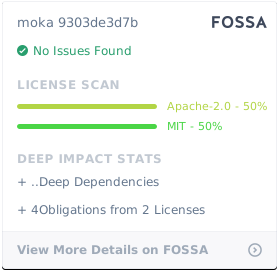
Moka is distributed under either of
|
|
|
|
- The MIT license
|
|
- The Apache License 2.0
|
|
|
|
at your option.
|
|
|
|
See [LICENSE-MIT](LICENSE-MIT) and [LICENSE-APACHE](LICENSE-APACHE) for details.
|
|
|
|
**Note on Licensing:**
|
|
|
|
Certain components, specifically
|
|
[`src/common/frequency_sketch.rs`](src/common/frequency_sketch.rs) and
|
|
[`src/common/timer_wheel.rs`](src/common/timer_wheel.rs), are distributed solely
|
|
under the Apache License 2.0. These files were ported from the [Caffeine][caffeine-git]
|
|
library and are not dual-licensed.
|
|
|
|
<!--
|
|
[](https://app.fossa.com/projects/git%2Bgithub.com%2Fmoka-rs%2Fmoka?ref=badge_large)
|
|
-->
|